What to Look for in a Convention Center (That Most People Forget)
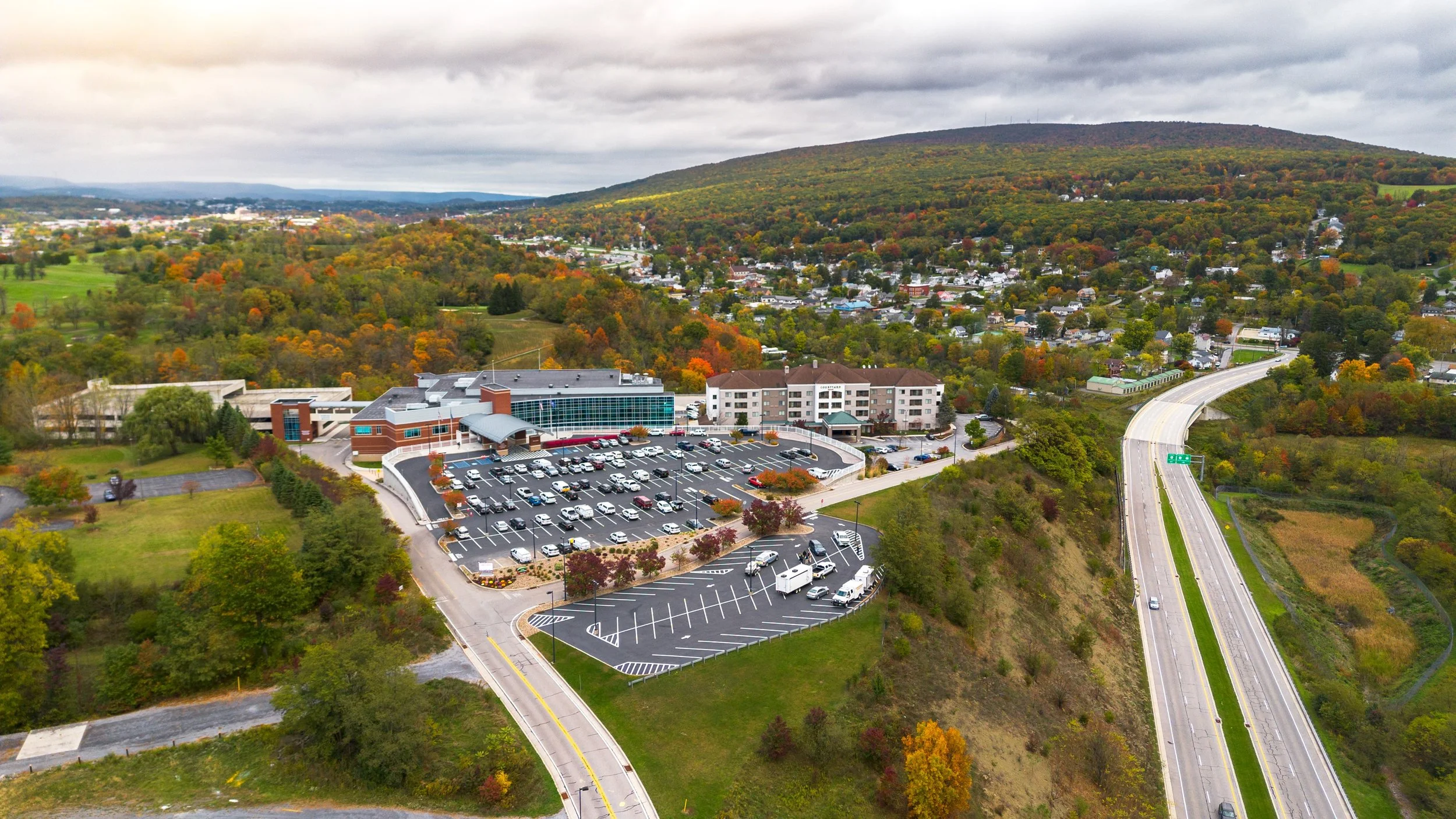
When most event planners start their venue search, they go straight for the obvious: How big is the ballroom? What’s the rental fee? Is it available on our date? Those questions matter, of course. But the difference between an event that runs smoothly and one that leaves your team scrambling often comes down to the details no one thinks to ask about until it’s too late.
Whether you’re planning a multi-day conference, a corporate retreat, or a large-scale banquet, the venue you choose shapes the attendee experience from the moment someone pulls into the parking lot to the final handshake of the evening. According to the International Special Events Society, information about the meeting space itself is the single most important factor in venue selection; ranking higher than cost, reputation, or even previous experience with the property (Cvent, n.d.). But beyond the meeting room, there’s a constellation of overlooked factors that can make or break your event.
Here are the things experienced planners wish they’d checked sooner.
Space Flexibility, Not Just Space
Every venue will tell you their square footage. Fewer will show you how that space transforms. A 2021 study published in Sustainability found that the type of event being hosted significantly changes which venue attributes matter most; meaning a space that works beautifully for a gala may fall flat for a trade show if it can’t be reconfigured (Lee et al., 2021). Convention centers with modular layouts, movable walls, and multi-room configurations give planners the flexibility to tailor the space to the event, not the other way around.
The question to ask isn’t just “How many people can this room hold?” It’s “Can this room hold a plated dinner for 200 on Friday and a classroom-style training for 80 on Saturday?” A venue that can do both, without chaos, is worth its weight in gold.
On-Site Catering That Understands the Mission
Food and beverage is one of the largest line items in any event budget. Research from the Convention Industry Council shows that F&B accounts for roughly 28% of total convention industry spending, the single largest share of event expenditures (Russell, 2006, as cited in Lee & Min, 2013). But beyond cost, food quality has a direct impact on how attendees feel about your event. A study published in the Journal of Convention & Event Tourism found that food function performance had a statistically significant effect on attendees’ overall satisfaction and their intention to return to future events (Lee & Min, 2013).
This is why having on-site catering, not just a list of approved vendors, matters. A venue with an in-house culinary team can coordinate timing with your agenda, accommodate dietary needs in real time, and adjust on the fly when your keynote runs long and lunch needs to push back 20 minutes. That kind of seamless coordination is hard to replicate when your caterer is loading in from across town.
Technology and AV That Just Works
According to industry research, 73% of event professionals use attendee experience as their primary method for evaluating event success—and audiovisual performance plays a critical role in shaping that evaluation (Willwork, 2026). Meanwhile, events that incorporate interactive AV elements see a 30–40% increase in audience engagement compared to those relying on basic setups (Conference Audio Visual, 2026).
Yet AV is often treated as an afterthought, something to figure out the week before. The best convention centers have built-in AV infrastructure: high-quality sound systems, reliable Wi-Fi capable of handling hundreds of simultaneous connections, projection and display options in every room, and on-site technical support staff who can troubleshoot in real time. When AV works well, nobody notices it. When it doesn’t, it’s the only thing anyone remembers.
Location Means More Than a Pin on the Map
The Tourism Institute emphasizes that location involves two distinct components: accessibility and attractiveness. A venue can be visually stunning, but if it requires multiple layovers or a confusing 45-minute drive from the nearest hotel, your attendance numbers will take a hit (The Tourism Institute, 2025). Planners should evaluate a venue’s proximity to major highways, airports, and critically, nearby lodging. Wu and Weber (2005) found that because convention centers are non-residential, the availability of hotels, restaurants, and entertainment within close proximity has a direct relationship with attendee satisfaction and can influence whether planners return to the same venue.
Parking deserves its own line in your evaluation checklist. Research indicates that parking-related issues rank among the most common complaints from event attendees (Prked, n.d.). A venue with ample, convenient, and free or affordable parking eliminates a frustration point that starts before your event even begins.
Dedicated Staff Who Know the Building
A venue is only as good as the people running it. Having responsive, dedicated on-site event coordination staff can mean the difference between a hiccup and a crisis. Bizzabo notes that venues with strong customer service and responsive coordination teams consistently earn higher planner satisfaction and repeat business (Bizzabo, 2024). This goes beyond having someone answer the phone, it means having a point person who knows the building’s quirks, anticipates logistical bottlenecks, and works alongside your team as a true partner from the first walkthrough to the last load-out.
When evaluating a venue, ask who your day-of contact will be and what level of support is included. Some venues charge extra for coordination; others build it into the experience because they understand that planner success is venue success.
The Overlooked Factor: How It All Comes Together
Individually, each of these factors; space flexibility, catering, technology, location, and staffing, matters. But the real competitive advantage of a venue is how well these elements integrate. The most stressful events aren’t the ones with one big problem; they’re the ones where five small things go wrong simultaneously because the venue’s systems and teams aren’t coordinated.
The best convention centers operate as a single ecosystem: the catering team talks to the AV team, the event coordinator has a direct line to maintenance, and the whole operation moves in sync with your agenda. That kind of cohesion doesn’t happen by accident. It happens when a venue is purpose-built for events and staffed by people who do this every day.
Planning an event and want to see how these details come together under one roof? Schedule a walkthrough of the Blair County Convention Center and let our team show you what we mean.
References
Bizzabo. (2024, September 24). 10 tips for choosing the perfect conference venue. Bizzabo Blog. https://www.bizzabo.com/blog/10-tips-for-choosing-the-perfect-conference-venue
Conference Audio Visual. (2026). Why use AV solutions for engaging corporate events in 2026. https://www.conferenceaudiovisual.com.au/why-use-av-solutions-for-engaging-corporate-events-2026/
Cvent. (n.d.). Evaluating hotel proposals when sourcing your venue. Cvent Blog. https://www.cvent.com/en/blog/events/evaluating-hotel-proposals-sourcing-venue
Lee, J. S., & Min, C. (2013). Examining the role of multidimensional value in convention attendee behavior. Journal of Hospitality & Tourism Research, 37(3), 402–425.
Lee, S., Boshnakova, D., & Goldblatt, J. (2021). Keeping the competitive edge of a convention and exhibition center in MICE environment: Identification of event attributes for long-run success. Sustainability, 13(9), 5030. https://doi.org/10.3390/su13095030
Prked. (n.d.). Master event parking: Top strategies for venue planners. https://prked.com/post/master-event-parking-top-strategies-for-venue-planners
The Tourism Institute. (2025, December 10). Choosing the perfect venue for your next convention: Types and considerations. https://thetourism.institute/mice-management/perfect-venue-next-convention-types-considerations/
Willwork. (2026). AV equipment meaning for corporate events. https://willwork.com/blog/av-equipment-meaning/
Wu, A., & Weber, K. (2005). Convention center facilities, attributes and services: The delegates’ perspective. Journal of Convention & Event Tourism, 7(1), 37–58.